
Most people who try to build a personal brand end up sounding exactly like everyone else. They smooth out every rough edge, post safe content, and wonder why nobody remembers them. A few months in, they quietly give up. It's not because personal branding doesn't work. It's because being generic doesn't work.
The way people buy, hire, and decide who to trust has changed. Company logos don't carry the weight they used to. People want to follow real humans with real opinions and a track record they can verify. That shift has created a massive opportunity for anyone willing to put themselves out there with intention. But showing up isn't enough. You need a clear identity, content that actually demonstrates your expertise, and a plan to turn attention into revenue.
This guide walks you through the full process. You'll learn how to define a brand that's genuinely yours, pick the right platforms, build trust fast, and monetize your expertise without feeling salesy. Whether you're starting from zero or stuck at a plateau, this is the playbook for making your personal brand profitable in 2026.
Laying the Foundation: Defining Your Unique & Authentic Personal Brand
Understanding the Power of Personal Branding in 2026
Personal branding isn't a popularity contest. You don't need millions of followers to build something profitable and impactful. What you need is trust and clear differentiation in a crowded market.
The attention economy has fundamentally changed how people make decisions. Corporate logos and polished advertisements don't carry the weight they once did. Instead, people trust faces, voices, and track records. They want to know the human behind the business. They want to see your journey, understand your perspective, and connect with your story before they ever consider buying from you. This shift creates massive opportunities for those willing to step into the spotlight and build their personal brand strategically.
A strong personal brand delivers tangible business results that compound over time. Inbound leads start finding you instead of the other way around. You gain higher pricing power because people pay premium rates for recognized expertise. Networking access opens up as influential people want to connect with established voices in their industry. Career optionality expands dramatically since opportunities flow to those with visible authority. Product launches become significantly easier when you've already built an engaged audience that trusts your recommendations.
Think of your personal brand as a trust multiplier. Every marketing effort you make gets amplified when people already know who you are. Cold outreach becomes warm. Sales conversations get shorter. Skepticism melts away faster. According to Success Magazine, this trust acceleration is what separates those who struggle to gain traction from those who experience exponential growth.
Unblanding Yourself: Embracing Authenticity and Contradictions

The old advice was simple. Polish your rough edges. Be professional. Don't share anything controversial. That conventional wisdom is now killing personal brands before they even start.
Hiding your contradictions makes you forgettable. When you try to smooth out everything that makes you different, you become just another voice saying the same things in the same way. The market doesn't need another generic expert. It needs you, with all your messy complexity and unique perspective.
Embrace your fractured self. Those seemingly contradictory traits you've been hiding? They're actually your greatest asset for standing out. The loud introvert who loves stages but needs three days alone to recover. The recovering perfectionist who now champions done over perfect. The analytical creative who brings spreadsheets to brainstorming sessions. These tensions create interest and memorability in ways that polished personas never can.
Define your voice using three personality traits that create productive tension. Direct, playful, and thoughtful. Ambitious, empathetic, and skeptical. Bold, nurturing, and data-driven. Pick combinations that feel true to you but slightly uncomfortable to claim publicly. That discomfort usually signals authenticity rather than manufactured positioning. Forbes research shows that brands built on these authentic contradictions dramatically outperform sanitized, conventional approaches.
Build your disagreement inventory. What are you publicly against? What common industry practices make you roll your eyes? What popular advice do you think is actively harmful? Taking clear stands transforms you from another information source into someone with a perspective worth following. People don't remember facts. They remember how you made them think differently.
Identifying Your Niche and Crafting Your Core Message
Trying to be everything to everyone is the fastest path to being nothing to anyone. The riches really are in the niches, especially when demand significantly exceeds competition in your chosen space.
Your sweet spot lives at the intersection of three critical elements.
 Passion represents what you genuinely enjoy talking about and working on day after day. Credibility comes from your experience, results, and unique insights that others can't easily replicate. Demand reflects what people actually need and are willing to pay for. All three must align or your personal brand becomes either unsustainable, unconvincing, or unprofitable.
Crystallize your positioning into one clear statement. I help [specific audience] achieve [specific outcome] through [specific method]. This isn't limiting. It's clarifying. "I help burnt-out executives build 7-figure coaching practices through authentic LinkedIn content." "I help e-commerce brands reduce ad spend by 40% through conversion rate optimization." Specificity attracts the right people and repels the wrong ones, making your marketing efforts exponentially more effective.
Use the Transformation Story Framework to make your message stick. Start with where you were, struggling with the same problems your audience faces now. Share what you learned through trial, error, and eventual breakthrough. Highlight the specific results you achieved with concrete numbers and timelines. Explain exactly how you now help others achieve similar transformations without the same painful learning curve you experienced.
Consistently reinforce three messaging pillars across everything you create. Expertise demonstrates you know what you're talking about through insights, frameworks, and depth of knowledge. Relationship shows you understand your audience's struggles, fears, and aspirations on a human level. Proof validates your approach through case studies, testimonials, and documented results. Every piece of content should hit at least one of these pillars, ideally two or all three.
Passing the Five Tests for a Memorable Brand Name
Your brand name carries more weight than most people realize. Powerful names must pass five specific tests: True, Unique, Magnetic, Transportable, and Durable.
A brand name should function like a zip file. It contains your whole truth compressed into just a few words that unpack into rich meaning when people encounter your work. The TUNTD framework helps you evaluate whether your positioning actually works or just sounds clever.
True means it genuinely reflects who you are, not who you think you should be. Unique ensures you stand apart from competitors rather than blending into the noise. Magnetic draws people in and makes them curious to learn more. Transportable works across different platforms, contexts, and career stages. Durable stays relevant as markets shift and your expertise evolves.
Build a two-word brand by combining a shadow word with a strategic modifier. Your shadow word represents a hidden trait you've probably been taught to suppress or minimize. The modifier reframes that trait as a competitive advantage rather than a weakness. Proud People Pleaser owns the instinct to help while setting boundaries around it. Strategic Overthinker transforms analysis paralysis into thoughtful decision-making. Ambitious Empath balances drive with genuine care for others.
This approach to naming creates instant intrigue because it acknowledges complexity rather than pretending you're one-dimensional. People connect with the honesty. They remember the tension. They want to understand how those seemingly contradictory traits work together in your approach to solving their problems.
Strategies for Growth, Monetization, and Scaling Your Personal Brand
Creating High-Converting Content and Choosing the Right Platforms
Your content needs to make people stop scrolling and think one thing: "This person gets it." That's the feeling you're after. Not admiration, not inspiration alone, but recognition. When someone reads your post and immediately relates to the problem, sees your credibility in solving it, and feels understood, you've created high-converting content.
The Four Content Types That Actually Convert
Mix these content types to keep your audience engaged and moving closer to working with you.
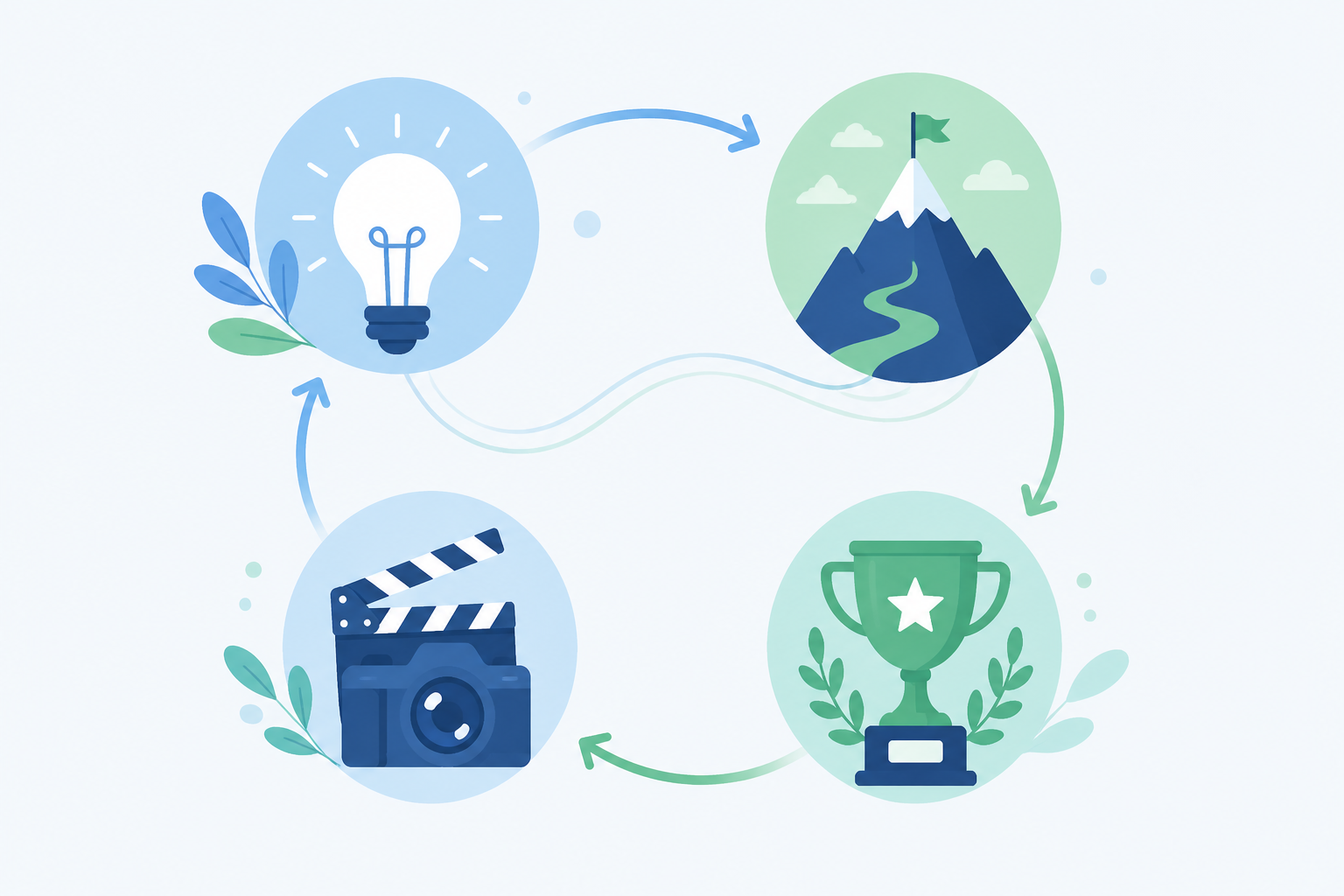 Educational content teaches something valuable and positions you as the expert. Inspirational content shifts mindset and gets people excited about what's possible. Experiential content shares behind-the-scenes moments, wins, and losses that build connection. Proof-driven content showcases results, case studies, and client transformations that eliminate skepticism.
Don't reinvent the wheel every single day. Create one solid piece of content, then adapt it across multiple formats and platforms. Record a 10-minute video breaking down your core framework. Pull three quotes from it for carousel posts. Grab the audio for a podcast clip. Write a LinkedIn article expanding on one section. Repurposing isn't lazy. It's smart strategy that amplifies your reach without burning you out.
Consistency Over Perfection Wins Every Time
Three quality posts per week on your main platform will outperform daily mediocre content every single time. Pick a schedule you can actually maintain and protect it like your most important client meeting. Your audience doesn't need you everywhere, but they do need to know when and where to find you consistently.
Choosing Your Platform Based on Where Your Audience Lives
LinkedIn works best for B2B audiences and professional services. X delivers quick-hit ideas and real-time conversations. YouTube builds long-form expertise and evergreen authority. TikTok and Reels maximize reach with younger demographics. Podcasting creates deep trust through intimate, long-form conversations. Pick your primary platform based on where your ideal clients actually hang out, not where you think you should be.
CTAs That Don't Make People Cringe
Every piece of content should include a natural call-to-action that guides your audience to the next step. No hard selling required. Comment with your biggest takeaway. Drop a 👋 if this resonated. Grab my free framework in the comments. Join 500+ people getting my weekly newsletter. These feel helpful, not pushy. Your audience wants direction, they just don't want to feel manipulated into it.
Building Trust and Leveraging Your Network
Trust accelerates everything in personal branding. With it, people buy faster, pay more, and refer others. Without it, you're invisible no matter how great your content is.
Social Proof Removes Friction
Screenshots of client results work better than promises. Before and after transformations show what's possible. Case studies with specific numbers make success tangible. Press mentions and speaking engagements borrow credibility from established platforms. Collaborations with respected names in your industry signal you belong at that level. Stack these strategically across your content and profiles to remove doubt before prospects even ask.
Real Relationships Beat Connection Collecting
Growing your network means building real relationships, not just collecting connections and followers. Quality conversations matter more than quantity of contacts. Spend time understanding what people actually need instead of pitching what you offer. When you genuinely help without expecting immediate return, opportunities find you.
Strategic Collaboration Multiplies Your Reach
Guest appearances on podcasts and webinars put you in front of established audiences who already trust the host. Podcast swaps give both parties fresh content and new listeners. Co-created content splits the work while doubling the distribution. Joint ventures align incentives and compound results faster than solo efforts.
The 15-Minute Commenting Strategy
Spend 15 minutes daily engaging thoughtfully on posts from your target audience and industry leaders. Not generic praise. Real insights, personal experiences, and follow-up questions that add value to the conversation. This simple habit puts you on radar screens, sparks genuine connections, and often leads to unexpected opportunities.
Remember this: 1,000 engaged people in your community beat 100,000 strangers following you any day. Build for depth, not just breadth.
Monetizing Your Expertise and Scaling Your Impact
A personal brand without revenue is a hobby.
 Let's turn yours into a business.
Seven Proven Monetization Models
Consulting leverages your expertise at premium rates for direct advice and strategy. Courses package your knowledge into scalable educational products. Events and speaking create income while expanding your authority. Coaching delivers personalized transformation at high margins. Digital products like templates, guides, and tools generate passive income. Done-for-you services command top dollar by taking implementation off client plates. Partnerships and sponsorships monetize your audience and influence.
Pick one model to start. Prove it works, get testimonials, refine your delivery, then expand to others. Trying to launch everything at once dilutes your focus and confuses your audience.
Systems and Processes Make Scaling Possible
You can't scale chaos. Implement automation tools for content scheduling so you're not posting manually every day. Set up email nurturing sequences that build relationships while you sleep. Use analytics dashboards to track what's actually working instead of guessing. Deploy CRM systems to manage growing prospect and client pipelines without dropping balls.
Build a content engine with templates, frameworks, and SOPs that create predictable growth. Document your process for creating content so anyone can replicate it. This isn't about losing your voice. It's about freeing yourself to focus on the strategic thinking only you can do.
Smart Outsourcing Frees Your Genius
Outsource content editing so your ideas get polished without draining your time. Hire designers for graphics that look professional, not homemade. Bring in video editors to handle the technical work you hate. Get community managers to nurture your audience while you create. Use content repurposing specialists to multiply your reach across platforms. Your job is generating core ideas and maintaining relationships. Everything else can and should be delegated as you grow.
Avoiding Common Pitfalls and Sustaining Momentum
Even smart people make predictable mistakes when building personal brands. Here's how to avoid the traps that kill momentum.
Every Post Should Reinforce Your Positioning
Posting random content without direction confuses your audience and dilutes your brand. Before you hit publish, ask yourself: does this reinforce what I want to be known for? If someone saw this post in isolation, would they understand my expertise and perspective? Every piece of content should be a clear signal, not noise.
Inconsistency Kills More Brands Than Bad Content
Pick a realistic posting schedule and stick to it. Not aspirational, realistic. Two posts per week you actually maintain beats five posts you abandon after three weeks. Treat your content calendar like client deliverables. Include natural CTAs in your content so people know what to do next. Momentum compounds when you show up consistently.
Study Success But Apply Your Unique Filter
Differentiate instead of copying others. Study successful brands to understand what works, but apply your unique angle, experience, and voice. The market doesn't need another version of someone else. It needs the original version of you with lessons learned from observing what resonates.
The Fortune Is in the Follow-Up
Reply to comments on your posts. Answer DMs thoughtfully, even when it's just to say thanks. Set up email sequences for lead magnets that nurture relationships over time. Most people create content then disappear. The real growth happens in those follow-up conversations where strangers become clients.
Action Creates Clarity, Perfection Creates Paralysis
Stop overthinking your brand identity. Perfection is procrastination in disguise. Start messy and adjust as you go. You'll learn more from three imperfect posts than six months of planning. Your brand will evolve as you do. That's not a bug, that's a feature. Launch before you're ready and refine based on real feedback, not imaginary concerns.
0 Comments